Bank Of America Mortgage Accelerator Program
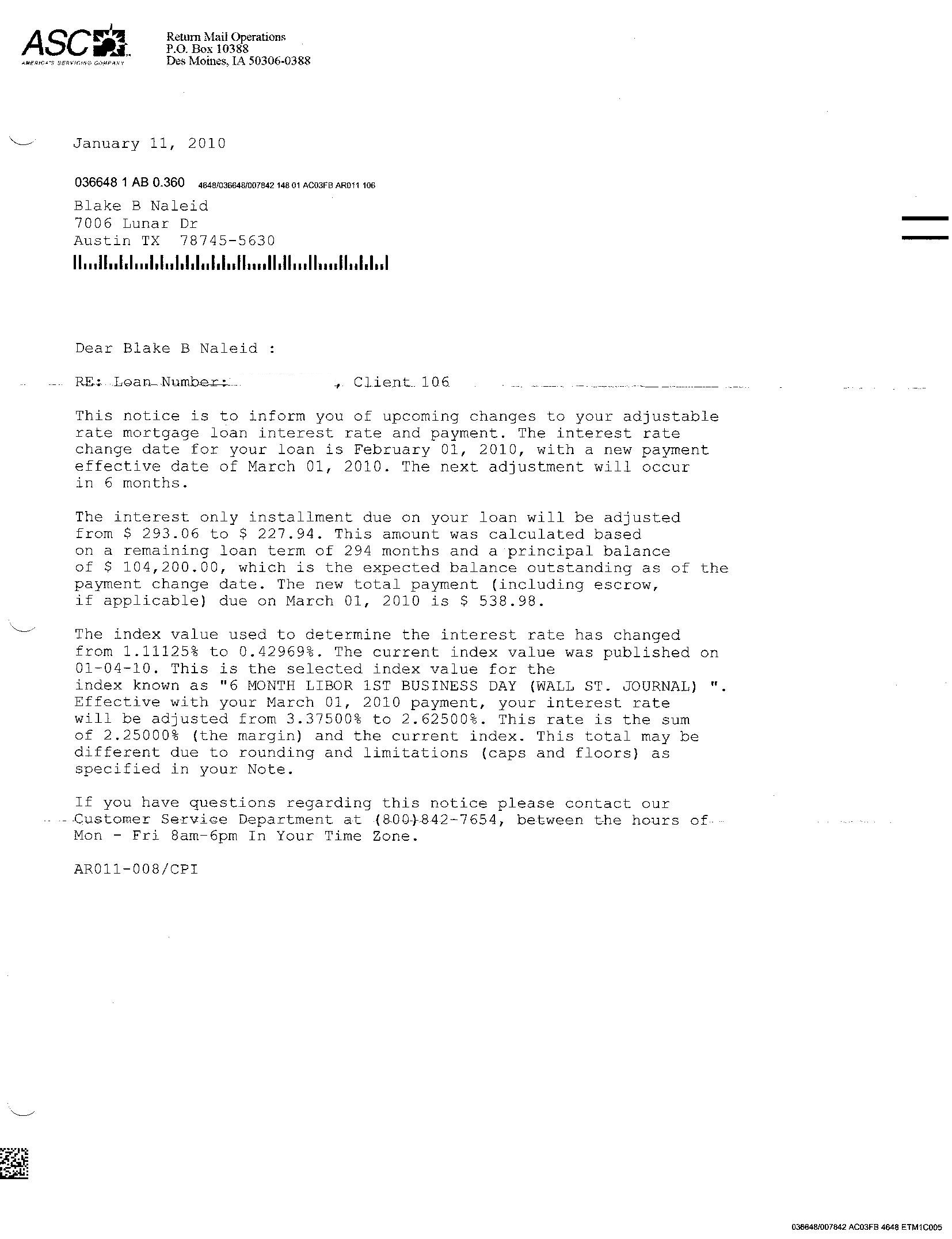
Bank of America ARMs use LIBOR as the basis for ARM interest rate adjustments. Your monthly payment may fluctuate as the result of any interest rate changes, and a lender may charge a lower interest rate for an initial portion of the loan term. This is not a bimonthly payoff of a 30-year mortgage; it's a line of credit tied to an account with direct deposit that works like a checking account to pay out regular living. Though you'll be out $100 in cash each month, over the (shortened) life of the loan, you'll save $152.36 a month and keep it out of the bank's hands.
4 Minute Read If nothing’s certain in life except death and taxes, a mortgage surely isn’t far behind—at least that’s the case for 70% of Americans, according to a recent study by Zillow. But have you ever stopped to imagine life without a mortgage? When you’re on a budget, it can be hard to picture. After all, you kinda like the whole eating-three-meals-a-day thing and don’t want to give it up to make room for loftier endeavors. If you have to choose between food and freedom, cheeseburgers win every time. Color Local experts you can trust. But here’s a little secret: You can pay off your mortgage without starving your budget.
Let’s explore three simple tricks for getting ’er done based on a $150,000, 30-year mortgage with a 4% interest rate. Divide and Conquer One easy way to shave years off your mortgage is to pay a little extra each month. Every dollar you add to your regular payment each month puts a bigger dent in your principal balance—and you don’t have to double-down to make a difference. Adding just one extra payment each year knocks four years and nearly $17,000 off your mortgage! Can’t do it in one big lump sum each year? Break it down into smaller chunks using one of these two options: –Divide your payment by 12 and add that amount to your monthly payment. In this case, we’d add an extra $60 to our regular $716 monthly payment, bringing the total up to $776.
–Pay half of your payment every two weeks—also known as bi-weekly payments—instead of a single payment once a month. That gives you the equivalent of 13 full payments a year instead of 12. (There are 52 weeks in a year. 52 ÷ 2 = 26 half payments = 13 full payments!) For a $716 monthly payment, that would mean $358 every two weeks. Throw in an Extra Andrew Jackson If $60 a month puts too much crunch in your budget, never fear—your favorite former president is here!
Put Andrew Jackson to work for you by adding $20 to your mortgage payment each month. Sounds easy, right? That’s because it is!
Even better, you’ll pay your mortgage off a year and a half early, saving over $6,200 in the process. It may not be a huge win, but think of all the lives you could change with that extra dough and another 18 months of living and giving like no one else. Unleash the Power of the Brown Bag Toting a brown bag to work every day won’t win you any fashion contests. But what if we told you it could save you $45,000? Now that’s a purse of a different color! If that doesn’t get you excited, consider this: Trading lunch out for eating in can make you a lean-and-mean, mortgage-free machine 11 ½ years ahead of schedule.
From now on, your bologna has a new name. It’s M-O-N-E-Y! A Word (or Three) of Caution Before you start making extra payments, let’s go over the ground rules. –Check with your mortgage company first. Some companies only accept extra payments at specific times or may charge prepayment penalties.
–Make sure additional payments are applied to the principal and not to the following month’s mortgage. –Don’t shell out your hard-earned cash for a fancy-schmancy mortgage accelerator program. You can accomplish the same goal all by yourself, thank you very much! Your Next Move Want to score major homeowner points? Make your next home purchase a smart one by paying cash (Dave’s favorite method) or sticking with a 15-year, fixed-rate mortgage. If you really want to knock it out of the park, keep your monthly payment to no more than 25% of your take-home pay.
If you’re looking to buy a home you can truly afford, try one of Dave’s real estate Endorsed Local Providers (ELPs). Your ELP is an expert real estate agent who can help you get a great deal on the home that’s right for you.
Mortgage Accelerator Program Free
Best of all, you can trust an ELP to give you the same helpful advice you’d hear from Dave.!
You’ve probably already heard the claims. That a biweekly mortgage can save you thousands of dollars. And that biweekly mortgage payments can shave years off the life of your loan and help you accrue equity in your home fast. Well, it’s true! Pardon the exclamation point.
You probably thought I was going to say it was a bunch of baloney. Anyway, “biweekly mortgage payments” are a sort of accelerated mortgage payoff system that allow you to make an extra monthly payment each year and in turn save money and pay your mortgage faster. The way it works is rather simple. How Biweekly Mortgage Payments Work Instead of making a single monthly each month, or 12 mortgage payments a year, you make a half mortgage payment every two weeks. And because there are 52 weeks in a year, that equates to 26 half mortgage payments annually, or 13 total monthly mortgage payments.
The result is an additional mortgage payment each year, but of course it’s not that simple. Nothing ever is. You can’t simply expect the bank or to allow you to mail in a half payment twice a month, that simply won’t fly. Your bank will likely ask you to set-up a biweekly payment system with an intermediary, which acts as a liaison between you and your lender. But biweekly payment companies can get expensive, especially when they charge a set-up fee of anywhere from $200-$500 and then an additional fee for each transaction. Fortunately, some banks and credit unions may offer the service in-house for free so you don’t have to worry about the fees. Always inquire with your loan servicer first before seeking out an outside company.
No sense is paying for a service you can get free of charge. So what are the benefits of a biweekly mortgage anyway? Total savings: $30,205 in interest Mortgage term: 309 months (loan paid off more than 4 years early) Be sure that you note the extra amount is to go toward the principal balance! If you don’t make this clear, some lenders will return the surplus money or apply it to your next payment. It’s important that this is 100% clear so the money goes to the right place. This free biweekly mortgage method actually works in your favor for several reasons. First, you don’t pay any extra junk fees to have someone do it for you.
And second, because you make an extra payment to principal each month, your loan balance is reduced each month, reducing the total amount of interest due throughout the life of the loan. So you pay less interest in a shorter amount of time. ?
The only drawback to doing it yourself is the old self-discipline issue. Can you trust yourself to make the higher payment each month?
Will you remember to do it? Luckily, these days you can set up automated payments within your checking account for free, so it shouldn’t be too much of a problem either way.
And you have the benefit of backing out at anytime if your financial situation changes. You don’t have to nail it down to an exact science either. You can always if you’d like.
Find a number that works for you and stick to it. Or make extra payments throughout the year based on your income fluctuations. If you’re determined to pay your mortgage off, every little bit helps. You can even. You don’t need to enroll in a “mortgage acceleration program” or hire a “certified mortgage acceleration specialist” to help you figure out how to make your more quickly. It’s really quite simple. Don’t fall for gags that require you to pay an extraneous set-up fee or a transaction fee every time you make a payment.
Your goal is to pay less, not more. And don’t confuse biweekly mortgages with “bimonthly mortgages.” A bimonthly mortgage, or semi-monthly mortgage involves no extra payments, just two half payments a month that equate to the typical 12 payments a year. In effect, the practice does very little to save money, and isn’t offered by many banks and lenders. Avoid Partial Mortgage Payments!
Bank Of America Mortgage Pay Online
One final note: Be careful not to make a “partial mortgage payment” to your mortgage lender as it could result in some unintended consequences. At worst, the mortgage company may send your payment back if it’s not made in full. This could result in a late fee and a possible credit ding if you don’t make the full payment in time. In other words, making two half mortgage payments a month probably won’t go well. But you can always call your lender or servicer and ask if you can pay your mortgage every two weeks just to be sure.
4.For torrents, too! Unlike other programs, OkayFreedom VPN not only protects your IP address in your browser, but will even guard you when you’re using downloaders and torrents. 5.For all browsers Whether you use Chrome, Firefox, Internet Explorer or an entirely different browser, OkayFreedom VPN works with them all. 3.Surf without limits Access your favorite websites even when you’re overseas – faster than with many other providers, as Netzwelt confirms. Okayfreedom vpn cracked.
For the record, mortgages are generally calculated monthly (not daily), so making a half payment early won’t result in any additional savings. And 24 half payments is just 12 full payments, so you won’t do yourself any favors. Assuming they do hang onto your partial payment, they may place it in a suspense account, where it will remain until enough money comes along to make at least one full mortgage payment. So if you make another partial or full payment after sending the initial partial payment, they’ll only apply the funds if the total is enough to make one full mortgage payment. This is why companies offer biweekly programs to avoid any misunderstanding with your lender if you send in two payments that are supposed to cover your full mortgage payment and a surplus toward principal.
When sending a payment that doesn’t correspond with your actual payment due, make sure it’s utterly clear that any additional amount will go toward principal and not escrow (usually you’re given a choice). That way there’s no confusion about why you’re paying more than the amount due. If you round up a payment, indicate where you want the excess to go. If the lender/servicer’s website doesn’t make this clear, call before you pay to ensure your payments will be applied properly.
Colin, Hello! Would you be able to tell me if some banks will actually amortize your biweekly payments biweekly or if they just hold on to the money and make a payment once a month. I’m assuming it would be more advantageous to the borrower if the biweekly payment can also be amortized biweekly. Do you know of any banks that offer this?
I just got out of the military and I’m planning to use my VA home loan soon and would like to make good decisions as I make the investment. Thanks for your help Colin!!! Great article, I just bought a house and was checking to see if I would need to setup a bi-weekly payment program or just add to my monthly payment and you pretty much answered it. So to be clear I have a mortgage total of 1100 a month, if I add roughly 95 a month to my payment I will get the same benefit as a bi-weekly payment program?

Typically in bi-weekly payment programs do you pay a little more per payment, I always understood them to be your typical monthly payment split in half. Thanks again. Thanks this information is really helpful. Another strategy is to get an amortization statement of your mortgage, and send in a extra principal payment along with the regular mortgage or if it is on auto pay, mail in the extra payment to be “applied to principal”for each pay you do that way will eliminate the interest for that month. It is a little tedious because you have to follow the amortization statement precisely. You don’t have to do it all the time, but doing that couple with the strategy that Colin provide really bring it down.
However, this plan works best in the early stages of the mortgage because the principal starts to increase the older the mortgage. Rod, Generally, payments received on the 15th of the month or earlier go toward the previous month’s payment.
If paid on the 16th or later will go toward following month. However, most mortgages don’t reward paying early in the month (on say the 16th) because they’re based on monthly interest, not daily. So if payment is due on the 1st of every month, and you pay two weeks early on the 16th, nothing would change (no savings) versus paying on the 31st or even up until the 15th of the following month. Conversely, a simple-interest mortgage accrues interest daily, so paying early in the month would save money, but most people don’t have simple-interest mortgages. Colin, Thank you so much for this article, the information you provide is great. Some years back we had what was considered to be a TRUE Bi-Weekly mortgage payment option, which not only allowed us to pay 26 half payments, but also had no initial set-up fee or extra service charges.
What is the difference, well as I came to understand it, is that if a mortgage company received half of your payment 15 days early, they wouldn’t just sit on it and wait for the 2nd half to come on the original due date and then post it. Instead they would post the half payment within a day or so of receiving it. So what that means is not only was I making a 13th full payment each year, but I was saving 2 weeks of interests for 12 (2 weeks early) payments (not 13 or 14 because payments 25 & 26 are principle only anyways). So my question is, yes there is one, where can I find a bank that actually does True Bi Weekly?